Context
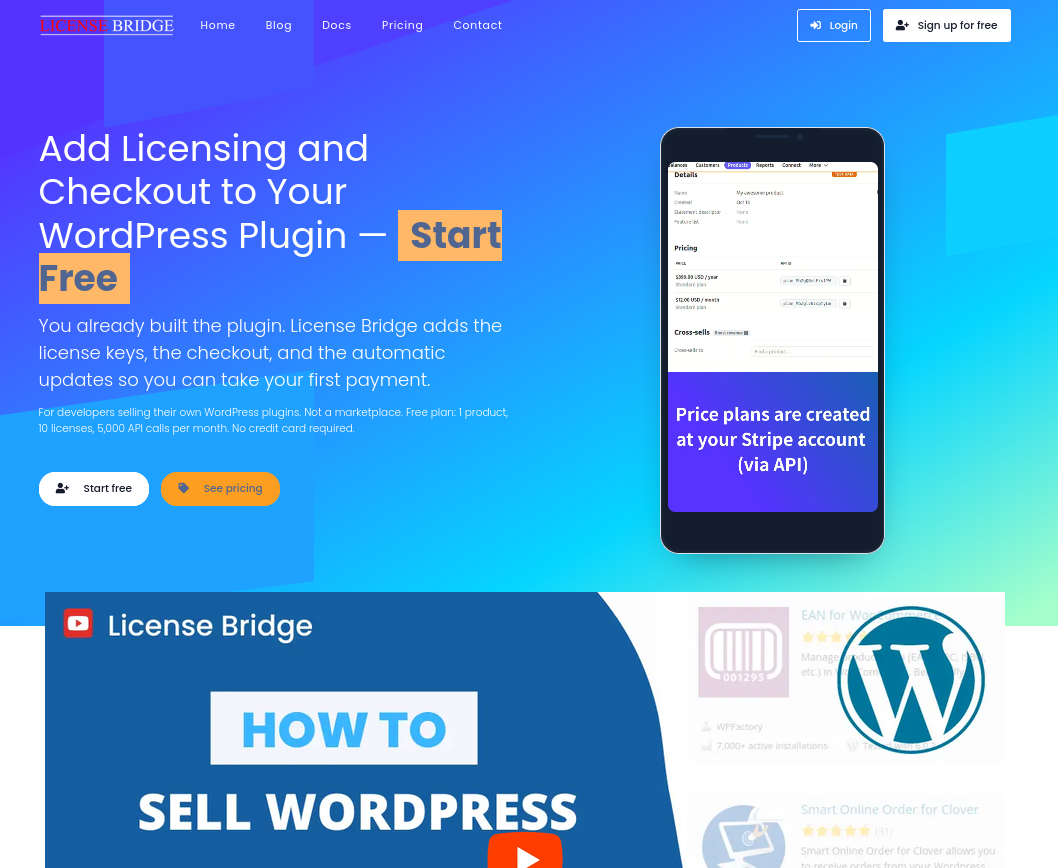
License Bridge is a SaaS platform I conceived and built for WordPress plugin and theme developers.
The original goal was simple: a developer should be able to add a small integration to a plugin, provide the product ID, and gain the core licensing infrastructure without building licensing, payments, API authentication, update delivery, and subscription handling from scratch.
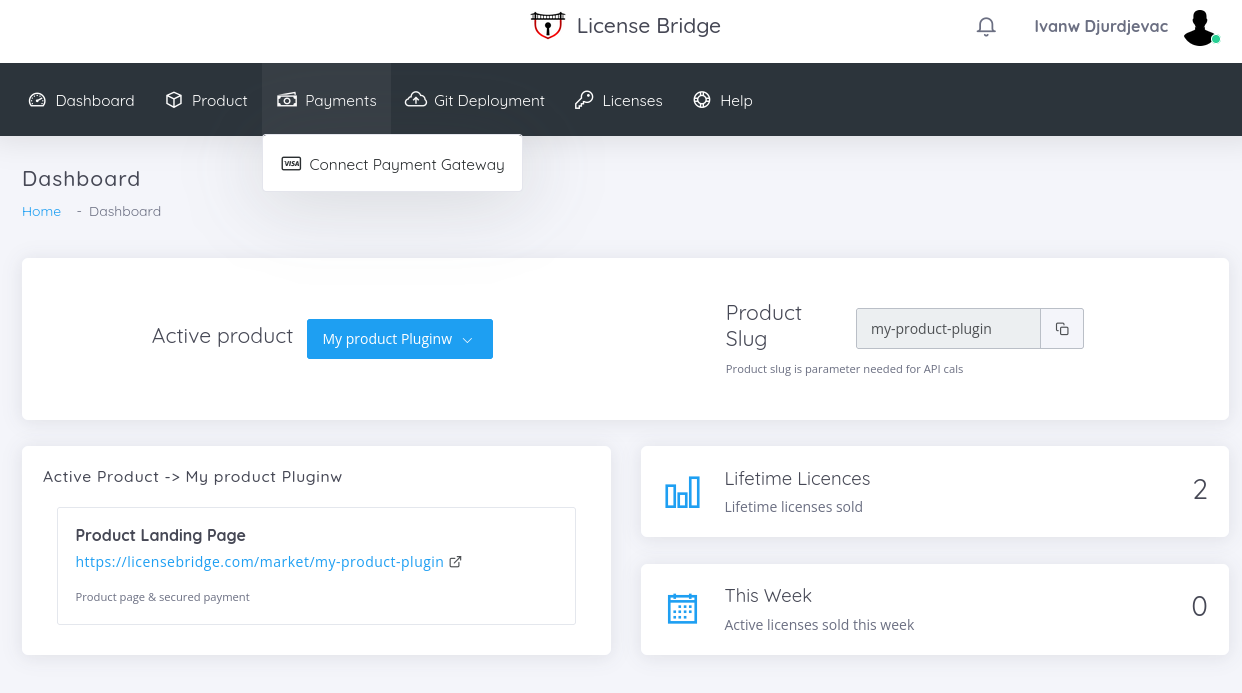
The product grew into an end-to-end system covering the merchant dashboard, customer checkout, license provisioning, WordPress SDK integration, software delivery, subscriptions, legacy imports, documentation, and deployment. It is publicly available at licensebridge.com.
My role
I designed and implemented the product end to end. My responsibilities include:
- product and technical architecture
- Laravel backend development
- MongoDB data modeling
- React and Next.js frontend development
- licensing and entitlement design
- payment integrations
- OAuth authentication
- WordPress SDK development
- software update delivery
- Markdown-based documentation and Typesense search
- automated testing
- Docker infrastructure
- deployment and production operations
This was zero-to-one product work: defining the problem, designing the system boundaries, building the implementation, and operating the result.
Core architecture
- 01Payment confirmedStripe, Paddle or PayPal
- 02License provisionedSigned key & OAuth client
- 03WordPress SDKAuthentication & validation
- 04Software updatesLicense-aware delivery
The central flow is:
sale → payment provider → webhook or confirmation → license provisioning → WordPress SDK → validation and software updates
That flow spans the License Bridge backend, merchant configuration, payment providers, customer WordPress installations, OAuth credentials, source-code repositories, and object storage.
The main engineering challenge is keeping those systems consistent when payment confirmation can be asynchronous and when provider behavior differs.
Licensing architecture
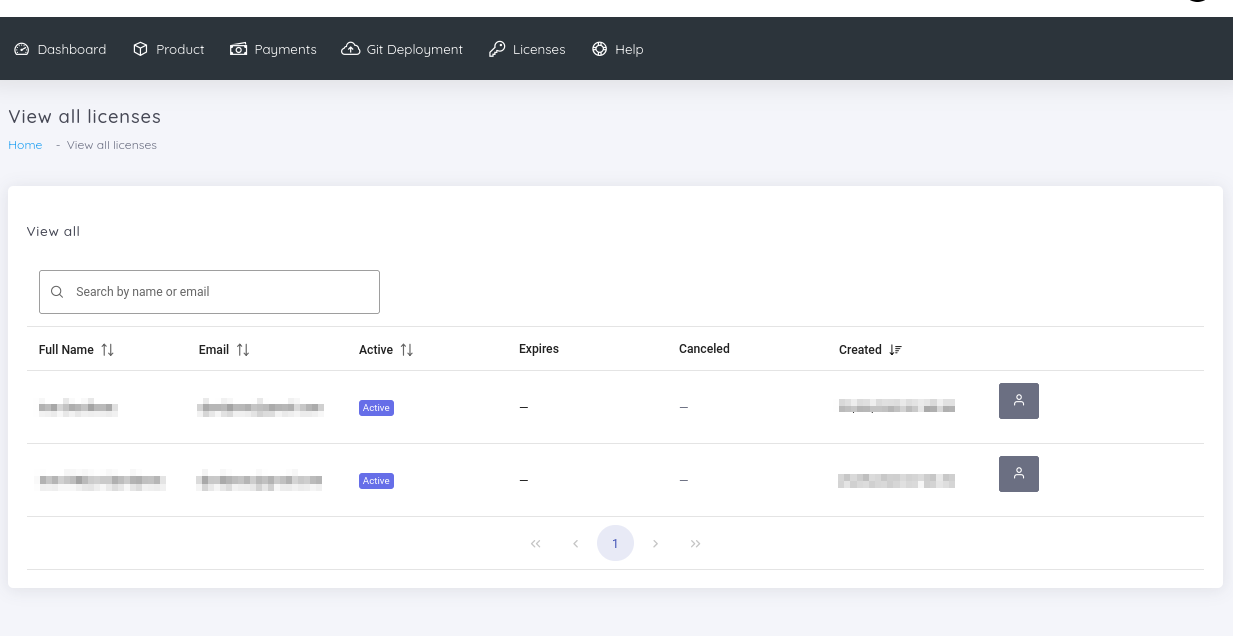
A License Bridge license is not simply a random key. Each license is represented by a LicenseUser record and includes a cryptographically signed key tied to the customer and product.
After payment is successfully confirmed:
- the license is provisioned
- the signed license key is generated
- an OAuth client is created for that license
- the WordPress SDK receives its credentials
- the plugin can authenticate against the License Bridge API
The plugin can verify the key locally with the corresponding public key or request the current license state from the API. The server can also check whether the related subscription or payment is still valid with the payment provider.
This separates two concerns: the cryptographic authenticity of a license and the customer's current entitlement to use the product.
Payments and checkout
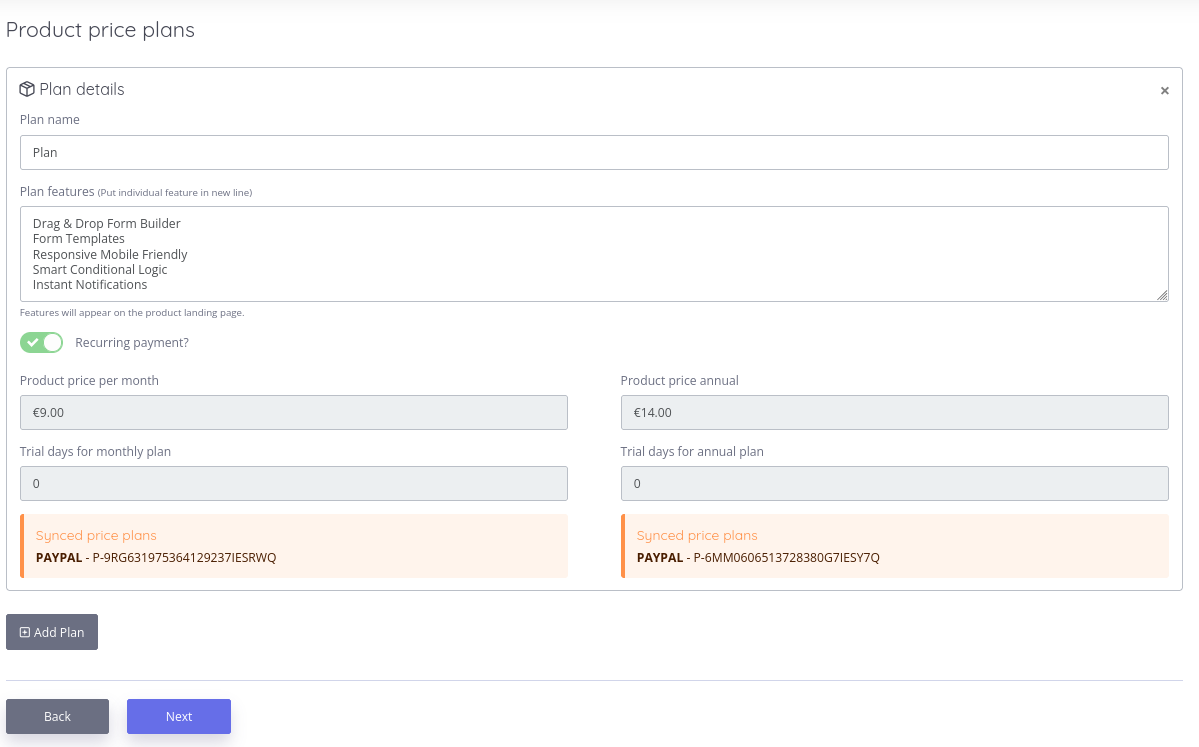
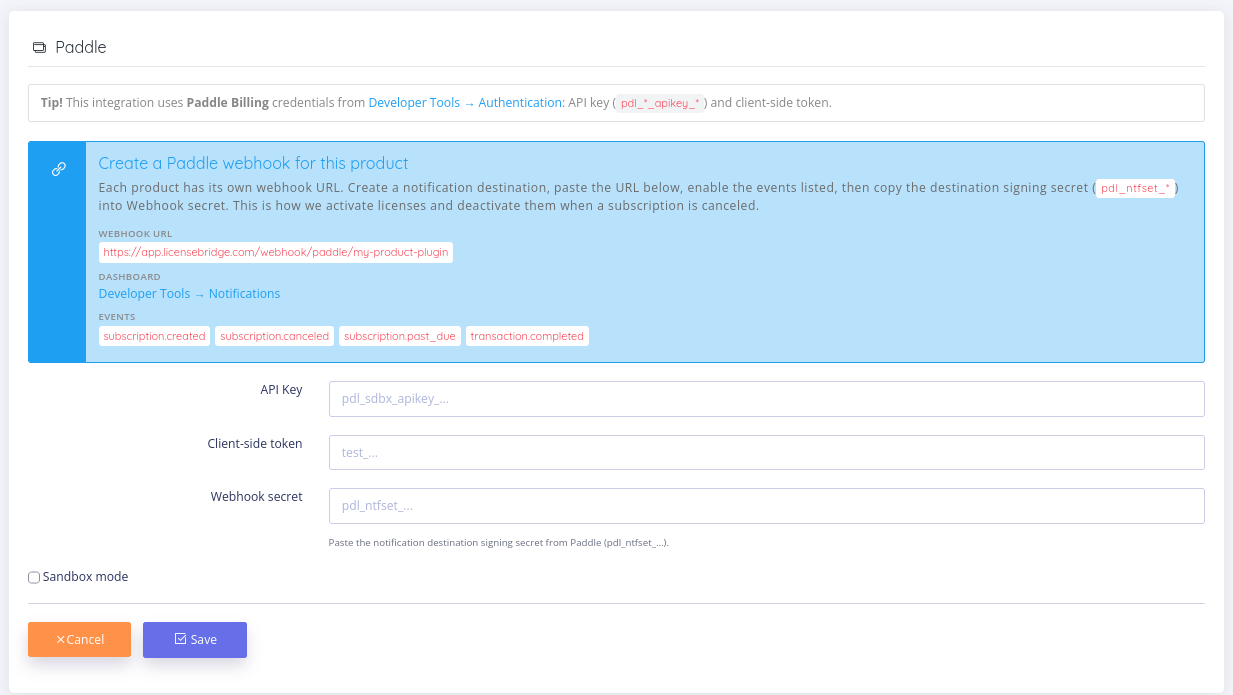
License Bridge supports merchant payments through:
- Stripe
- Paddle Billing v2
- PayPal
Products can use monthly, annual, or lifetime plans. A factory-based payment layer selects the concrete implementation from the gateway and charge type.
The providers require different flows:
- Stripe follows a more synchronous path and can provision after a successful charge.
- Paddle Billing v2 creates a deferred transaction completed through Paddle.js, return handling, and webhook confirmation.
- PayPal uses a redirect and confirmation path before provisioning.
The platform handles provider-specific plan identifiers, subscriptions, one-time purchases, confirmations, webhooks, refunds, cancellations, imported licenses, and sandbox-versus-live configuration.
Provisioning is deliberately separate from payment initiation, ensuring that asynchronous providers cannot activate a license before payment is confirmed.
Platform billing and merchant billing
The system contains two distinct billing domains.
Platform billing is the subscription a merchant pays to use License Bridge. It is handled through Paddle Billing v2 and Laravel Cashier.
Merchant billing is the payment a merchant's customer makes for a plugin or theme. It uses the Stripe, Paddle, or PayPal credentials configured for that individual product.
The separation matters because the two domains have different customers, credentials, plans, webhook routes, and lifecycle rules.
WordPress SDK
I built a dedicated SDK so WordPress developers do not need to implement the License Bridge protocol themselves.
After registering a product with the SDK, a developer can support:
- hosted purchase links
- checkout initiated from WordPress administration
- local credential storage
- OAuth authentication
- license status checks
- subscription cancellation
- premium upgrades
- standard WordPress plugin updates
- migration of imported licenses
The SDK uses OAuth client credentials associated with an individual license. This lets product developers focus on their plugin or theme instead of rebuilding licensing infrastructure.
Software and update delivery
License Bridge can connect to GitHub or Bitbucket repositories. A merchant selects a repository, branch, and optional plugin subfolder. The platform can then prepare the WordPress package for distribution and serve it through the update workflow.
This connects source delivery to the same product, plan, and licensing model used by checkout. The WordPress SDK can participate in standard update checks while access remains tied to the customer's license state.
Imports and migration
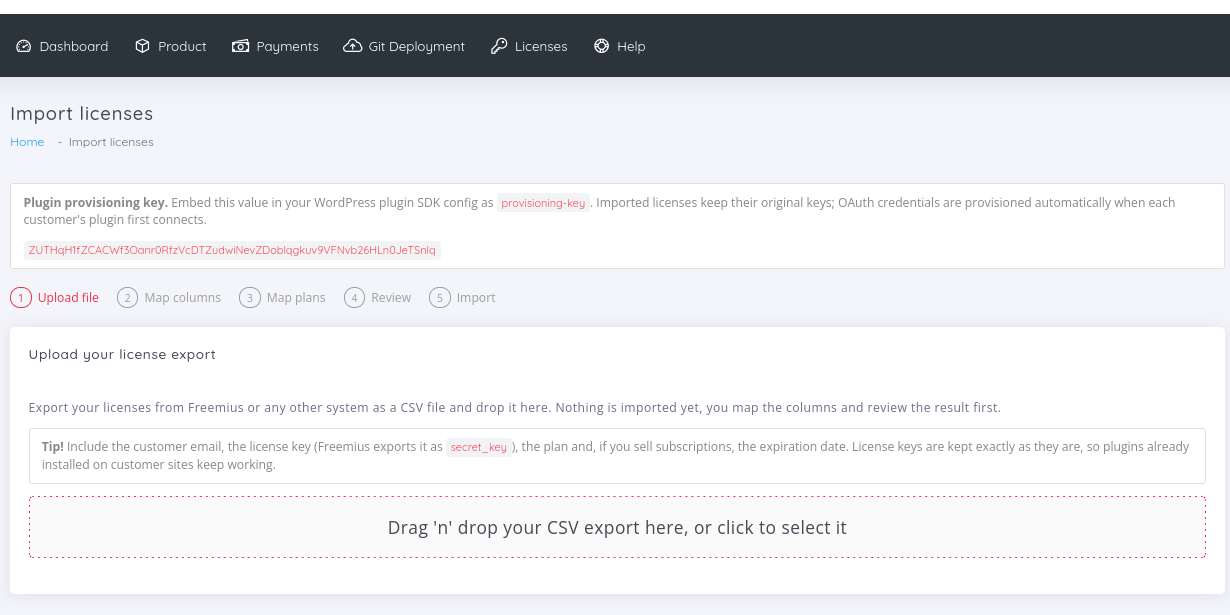
The platform also supports CSV imports for licenses created in other systems, including migrations from tools such as Freemius or Easy Digital Downloads.
Imported licenses enter the same core licensing model without requiring a new checkout. The import flow handles column mapping, plan association, and duplicate considerations so merchants can adopt the platform without abandoning existing customers.
Documentation
I created a documentation system based on Markdown source files, with Typesense providing search. Keeping documentation in text-based source makes it versionable and maintainable alongside the product while still giving users fast full-text discovery.
Production ownership
The product includes Docker-based infrastructure and the deployment setup required to run the application and its supporting services. My ownership covers both application development and the operational work needed to make the platform publicly available.
Outcome
License Bridge demonstrates end-to-end SaaS ownership across product definition, distributed payment workflows, cryptographic licensing, API authentication, WordPress integration, software delivery, documentation, and production operations.
Its strongest proof is technical breadth and systems integration rather than unverified business metrics.